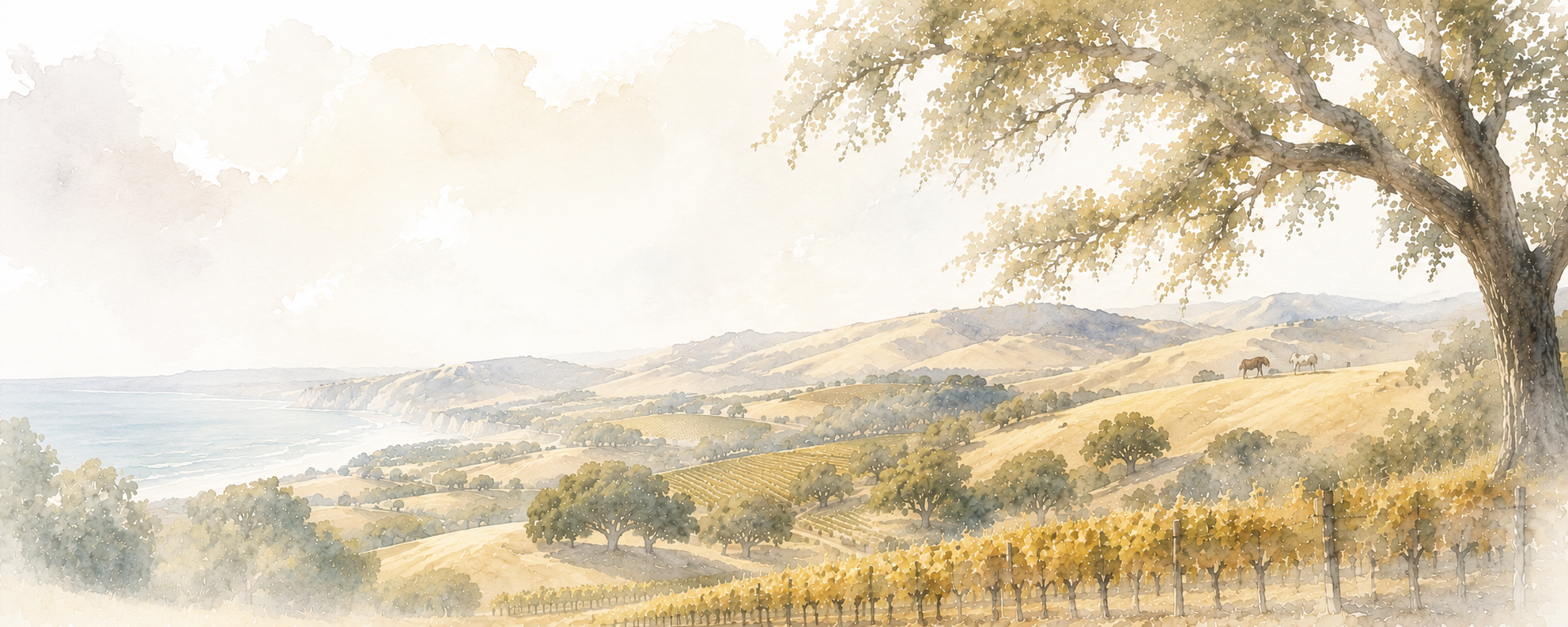
Paso Robles is one of the most misunderstood wine regions in America. Most people have heard of it as "the affordable Napa" — which is true in price, but misses everything that makes it actually interesting. What Paso has that Napa doesn't is approachability. You can pull into a driveway on the Westside and end up talking to the winemaker for an hour. You can find a Grenache Blanc from a family that's been on the land for three generations and nobody outside of San Luis Obispo County knows about it. That's the experience worth traveling for.
This guide is organized around how you actually plan a wine trip — not alphabetically, not by rating score, but by what you're looking for. The first-timer who needs an entry point. The wine geek who wants the producers nobody talks about. The couple who wants the most beautiful setting they can find. We've been to all of these. We'd go back to all of them.
What every first-timer should know about Paso Robles wine country.
- The Westside and Eastside have genuinely different climates and wine styles. Westside runs cooler with more Rhône varieties and Bordeaux blends. Eastside is warmer with bolder Zinfandels and Cabernets. Plan accordingly.
- Most tasting rooms now require reservations, especially on weekends. Book at least 2–3 days in advance or risk being turned away at your favorites.
- Paso's diurnal temperature swing — up to 50°F difference between day and night — is what gives the wines their structure. It's also why evenings here are extraordinary even in August.
- Downtown Paso has excellent tasting rooms walkable from the main square. If you're coming for a day trip without a car plan, start there.
- Tasting fees are typically $25–45 per person and are often waived or credited with a bottle purchase. Budget accordingly.
For the First-Timer
These are the wineries that give you the clearest picture of what Paso Robles actually is — the breadth of the region, the quality of the land, and the warmth of the people making the wine. If this is your first trip, start here.
JUSTIN Winery
Estate Winery · Westside · Bordeaux BlendsThe winery that put Paso Robles on the national map and still one of the best reasons to visit. JUSTIN's Isosceles blend has been winning over skeptics since 1987. The estate experience is polished without being precious — you get the full picture of what Westside Paso can do at its best. If you have the budget, book the overnight at the JUST Inn on property. The Michelin-starred restaurant is worth a separate reservation.
DAOU Vineyards
Estate Winery · Westside · Soul of a LionDAOU sits at 2,200 feet on Daou Mountain with views that genuinely stop conversation. The wines — especially the reserve tiers — regularly beat Napa bottles at twice the price. The tasting experience is elevated and intentional. Go for the flagship Soul of a Lion if your budget allows. The views alone justify the drive up the hill.
Eberle Winery
Pioneer Estate · Westside · Wine CavesGary Eberle planted the first Syrah vines in California. That's not a marketing claim — it's history. His tasting room offers something increasingly rare in wine country: the chance to taste with someone who was here at the beginning and hasn't run out of things to say about it. The cave tour is one of the best free experiences in Paso Robles. Don't skip it.
For the Wine Geek
These are the producers doing something that requires explanation — unusual varieties, minimal intervention, small-production bottlings that don't show up on wine lists outside of California. This is the Paso that most visitors never find.
Tablas Creek Vineyard
Organic · Rhône Specialist · WestsideFounded as a partnership between the Haas family and Château Beaucastel in Châteauneuf-du-Pape, Tablas Creek is the reason Paso Robles became synonymous with Rhône varieties in America. They propagate their own vines from cuttings imported from France — a level of commitment to terroir that makes even serious wine people pay attention. The tasting room is unpretentious and the staff actually knows what they're talking about.
Epoch Estate Wines
Boutique · York Mountain AVA · Historic SiteEpoch sits on the site of York Mountain Winery — one of California's first bonded wineries, dating to 1882. The current winemakers are producing some of the most compelling Tempranillo and Rhône blends in the state from a location with enough history to fill a book. Appointment only, which keeps the experience personal and the quality of conversation high.
Tin City Collective (Multiple)
Urban Winery District · Downtown AdjacentTin City is what happens when a cluster of ambitious young winemakers share space and refuse to make conventional wine. The converted industrial complex near downtown houses a rotating cast of small-production labels — natural wines, pét-nats, field blends, experimental varieties. It's the most interesting two hours you can spend in Paso Robles if you're willing to taste things you've never heard of. Stop at Desparada, Field Recordings, and Giornata while you're there.
"Paso Robles is what Napa must have felt like forty years ago — before anyone knew what was coming. The wines are world-class. The people haven't forgotten how to be human about it."
For the Most Beautiful Setting
Sometimes you're not going primarily for the wine — you're going for the landscape, the light, the feeling of standing somewhere genuinely extraordinary. These are the wineries where the setting is the experience.
Halter Ranch Vineyard
Historic Ranch · Westside · Oak TreesHalter Ranch is 2,000 acres of rolling hills, ancient oak trees, and some of the most photogenic vineyard land in California. The historic barn and the old-growth oaks surrounding the property look like they were designed by someone who understood exactly what wine country should feel like. The wines are serious — Syrah and blends particularly — but the setting would justify the trip even if they weren't.
Cass Winery
Full Experience · Eastside · Lunch on PropertyCass is one of the few places in Paso where you can make a full afternoon of it — tasting, lunch in the on-site café, and a stroll through the estate gardens. The setting is warm and welcoming in the way that Eastside Paso tends to be: big skies, rolling hills, and an ease that Napa long ago forgot how to do. Their Rockin' One red blend is one of the best value bottles in the region.
Planning Your Winery Day
A well-planned day in Paso Robles looks like this: two or three wineries maximum, with real time at each one. The mistake most visitors make is trying to hit six wineries and remembering none of them. The wineries worth visiting reward slow attention.
If you're based in Paso's downtown, start with a morning tasting at one of the walkable tasting rooms near the park — LXV and the Paso Robles Wine Merchant are both excellent. Then drive Westside in the afternoon when the light is best and the crowds have thinned. End at a winery with dinner on property or head back downtown to one of the restaurants that has been quietly getting extraordinary.
The region is large — 26 distinct AVA districts spread across an area three times the size of Napa Valley. You will not see all of it in a weekend. That's not a problem. That's the reason people come back.
Three wineries that together show you everything Paso is.
- Morning: Tablas Creek — start with the producers who define the region's identity. The Esprit de Tablas blanc is one of the best white wines made in California.
- Midday: Halter Ranch — lunch on the patio if they're serving, then a walk through the estate to understand what this land actually looks like at its most beautiful.
- Afternoon: Tin City — end the day with something unexpected. A pét-nat from a label you've never heard of, poured by the person who made it.